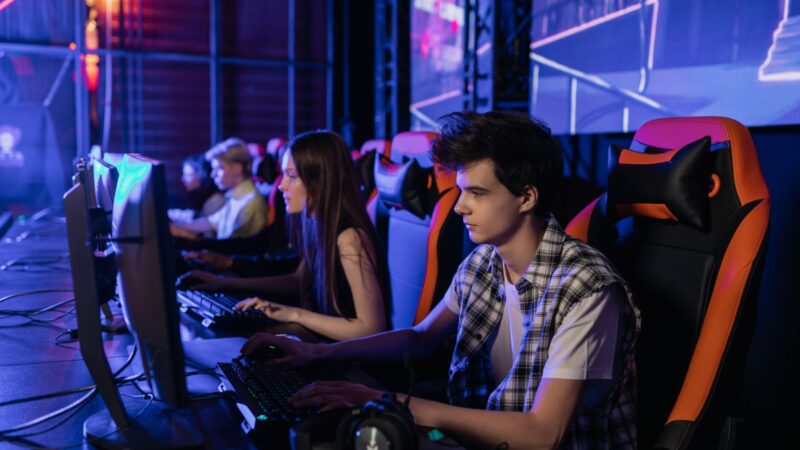
In environments like CS2 case battle, players often believe they are “reading patterns” or anticipating outcomes based on previous events. While the results themselves may be unpredictable, the human brain is naturally wired to search for structure, detect regularities, and build expectations. This tendency is not limited to gaming — it is a core function of cognition that plays a central role in learning, decision-making, and adaptation.
Why the brain is built for pattern recognition
Pattern recognition is one of the brain’s most fundamental abilities. From an evolutionary perspective, recognizing patterns helped humans survive — identifying threats, predicting environmental changes, and making faster decisions.
In modern contexts, this ability allows us to:
- Recognize faces and emotions
- Learn languages
- Understand cause-and-effect relationships
- Anticipate outcomes based on prior experience
Games provide a controlled environment where this mechanism becomes especially visible. Repetition, feedback, and variation create ideal conditions for the brain to search for meaning.
How games activate predictive thinking
Most games are built around systems that repeat with variation. Whether it’s movement patterns, opponent behavior, or reward structures, players are constantly exposed to sequences that feel familiar but are never identical.

This activates predictive thinking:
- The brain forms hypotheses (“this usually happens next”)
- It tests them through interaction
- It adjusts expectations based on feedback
This cycle is known in cognitive science as predictive processing — the idea that the brain is constantly generating and updating models of the world.
Even when outcomes are partly random, the brain continues to search for signals within the noise.
The illusion of patterns in uncertain systems
One of the most interesting psychological effects in gaming is the tendency to perceive patterns where none actually exist. This is known as apophenia — the human inclination to detect meaningful connections in random data.
In game environments, this may lead players to:
- Believe in “winning streaks” or “losing streaks”
- Assume that recent outcomes influence future ones
- Develop rituals or strategies based on coincidence
While these beliefs are not always grounded in actual system behavior, they feel real because the brain prefers structured explanations over randomness.
Learning through repetition and feedback
Despite the presence of randomness, games are powerful learning tools. They provide immediate feedback, which is essential for reinforcing neural connections.
Each interaction follows a simple loop:
- Action
- Outcome
- Evaluation
- Adjustment
Over time, this loop strengthens pattern recognition and improves decision-making. The brain becomes more efficient at identifying relevant signals and ignoring irrelevant ones.
This process is closely related to reinforcement learning, a key concept in both neuroscience and artificial intelligence.
Heuristics: mental shortcuts in action
To process information quickly, the brain relies on heuristics — simplified rules that help make decisions without analyzing every detail.
In gaming contexts, heuristics might include:
- “This strategy worked before, so it might work again”
- “Higher risk may lead to higher reward”
- “Recent outcomes are more relevant than older ones”
These shortcuts are useful but not always accurate. They can lead to faster decisions, but also to systematic biases.
Understanding how heuristics work can help players become more aware of their own thinking patterns.
Pattern recognition and cognitive flexibility
Recognizing patterns is only part of the equation. Equally important is the ability to adapt when patterns change.
Cognitive flexibility refers to the brain’s ability to:
- Update beliefs when new information appears
- Shift strategies when conditions change
- Let go of outdated assumptions
Games are particularly effective at training this skill because they constantly introduce variation. What worked in one situation may not work in the next.
Players who succeed over time are often those who can balance pattern recognition with adaptability.
The emotional side of pattern perception
Pattern recognition is not purely logical — it is also influenced by emotion. Wins and losses can shape how patterns are perceived and remembered.
For example:
- Positive outcomes reinforce certain beliefs (“this approach works”)
- Negative outcomes may trigger doubt or overcorrection
- Emotional intensity can distort memory of past events
This interaction between cognition and emotion affects decision-making. It explains why people sometimes stick to ineffective strategies or abandon effective ones too quickly.
From gaming to real-world skills
The cognitive processes involved in gaming extend far beyond entertainment. Pattern recognition, predictive thinking, and adaptive learning are relevant in many real-world domains.
These include:
- Problem-solving in complex environments
- Learning new skills
- Making decisions under uncertainty
- Interpreting data and trends
Games provide a simplified model of these challenges, allowing individuals to practice and refine their cognitive abilities.
Building awareness of cognitive patterns
One of the most valuable outcomes of engaging with complex systems is increased self-awareness. By observing how we recognize patterns and make decisions, we can better understand our own thinking.
Key questions to consider:
- Am I reacting to actual patterns or perceived ones?
- How do recent outcomes influence my decisions?
- Am I adapting, or repeating the same approach?
This level of reflection can improve not only performance in games, but also decision-making in everyday life.
A brain wired for meaning
At its core, the human brain is designed to find meaning — even in uncertainty. Pattern recognition helps us navigate the world, but it also makes us susceptible to seeing order where there is none.
Games highlight this duality. They show both the power and the limitations of our cognitive systems.
Understanding how the brain processes patterns allows us to approach complex environments with greater clarity. Instead of relying purely on intuition, we can combine awareness with adaptability — turning pattern recognition from a bias into a skill.