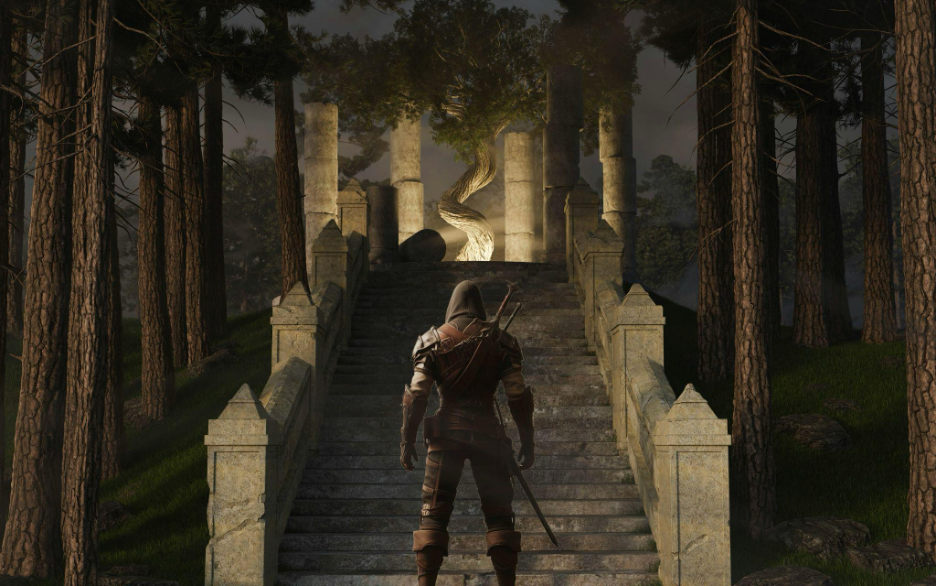
There is a recurring irony in modern gaming: a hero stands on the precipice of saving the world yet chooses to spend the next three hours in a dingy tavern playing cards against a nameless NPC. This is the “Gwent Effect.“ It’s that pivot point where a side activity stops being a distraction and starts defining the player’s entire experience. From the gritty, tactical layers of The Witcher 3 to the old-school obsession of Final Fantasy’s Triple Triad, these card games have shifted from “filler” to a foundational pillar of RPG design.
Why Players Crave a Break from the Action
The pull of an in-game card deck usually starts with a need for a “mental reset.” Modern RPGs are heavy. They demand hours of moral complexity, intense combat, and emotional investment. After a particularly draining questline, the brain craves a different type of engagement, one that doesn’t involve twitch reflexes or life-or-death consequences.
Card games offer a “safe” mechanical loop. The rules are fixed, the environment is quiet, and the pace is entirely up to the player. It’s a form of active decompression; you’re still “in” the game world, but the cognitive load has shifted from survival to strategy. This balance is what keeps players from burning out during a massive 100-hour campaign.
The Shift Toward Accessible Gaming
As the industry has evolved, the technical polish of these “mini-games” has reached a professional peak. This isn’t just a gaming trend; it’s a standard of the broader digital landscape where developers pour massive resources into the “game feel”—ensuring the tactile click of a card or the snap of a UI feels premium. We see this crossover constantly; the high-performance, frictionless interfaces of reputable online casinos like Jackpot City have set a high bar for instant feedback. Today’s audience has zero patience for clunky menus.
This cross-pollination, where mobile-first accessibility meets high-end aesthetics, is why these digital spaces feel so natural to navigate, whether you’re in a Novigrad tavern or on a smartphone.
The Scavenger Hunt: Collection as a Primary Driver
This obsession isn’t just about the rules of the game; it’s about the “scavenger hunt.” Long before Geralt was hunting monster cards, Final Fantasy VIII turned its entire world map into a giant deck-building quest.
The real magic of the “Gwent Effect” is how it shrinks the massive RPG experience into a portable deck. Snagging a rare card hits just as hard as finding a legendary sword. It gives you an actual reason to care about some random merchant or a piece of local lore in a way that those boring “fetch quests” never could.
Building Worlds, One Card at a Time
Beyond the “one-more-round” hook, these card games are brilliant world-building. A deck is a cultural time capsule. In The Witcher, Gwent is a playable history of old border wars and political grudges. In Red Dead, poker isn’t about the pot; it’s the atmosphere. The groan of the floorboards, the cigar smoke, and the agonizingly slow deal make the world feel lived-in.
These quiet moments are the “human” pulse of an open world. They’re a much-needed break from the grand, exhausting heroics. It’s a grounding reminder that even the most legendary warriors eventually need to pull up a chair, grab a drink, and lose their shirt to some local merchant.
The Verdict
The “Gwent Effect” works because it understands that a great RPG needs a change of pace. By tucking a rewarding game inside the main one, developers essentially double the immersion. It gives the strategist and the collector a reason to stay in the world long after the main quest loses its steam. At its core, it’s a simple truth: sometimes the highlight of a 100-hour odyssey isn’t the final boss; it’s that one perfect, winning hand.