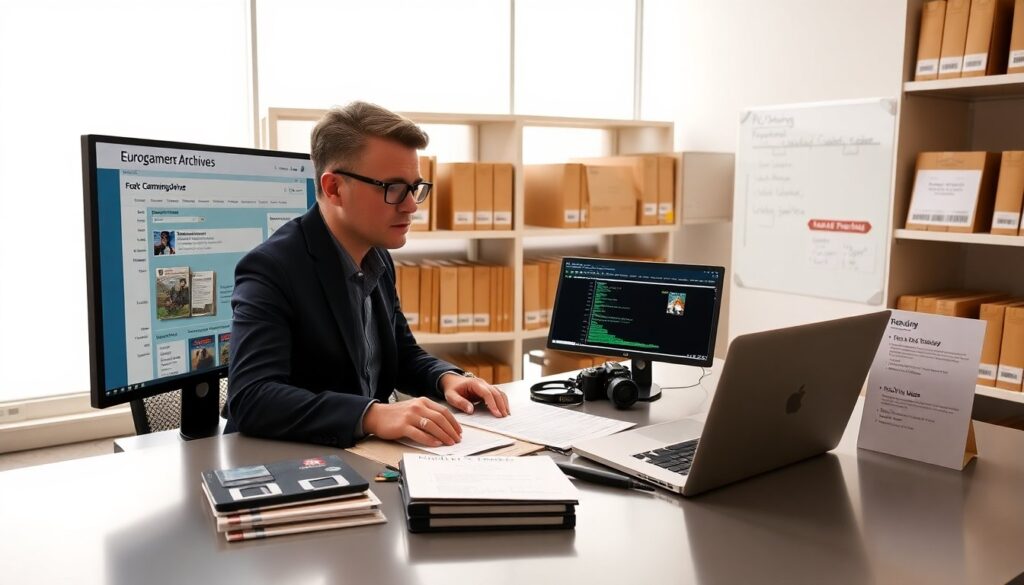
pc gaming archives eurogamersonline document the history of PC games. The site curates files, scans, and interviews. It stores game builds, magazines, and patches. It offers access to scholars, players, and modders. This guide explains origins, contents, and how people use the archive.
Key Takeaways
- The PC gaming archives at EurogamersOnline preserve European PC game history through curated files, scans, and interviews, focusing on preservation of lost cultural and game materials.
- Users can access a wide range of archived content including playable game builds, magazine scans, patches, and developer interviews, all organized with detailed metadata for easy searching.
- The archive supports legal and ethical use by flagging copyright statuses, advising on permissions, and removing items upon takedown requests, while promoting respectful reuse and citation.
- Community restoration projects hosted by the archive revive forgotten PC games by fixing compatibility, rebuilding missing assets, and providing modern launchers for legacy titles.
- The archive aids researchers and players by combining primary source materials with contemporary gaming coverage, fostering study of game design, history, and cultural impact.
The Origins And Mission Of EurogamersOnline’s PC Archives
EurogamersOnline launched its PC archive to save game files and cultural records. It started as a volunteer effort in the early 2010s. The team scanned printed reviews and captured installers. It collected developer notes and community patches. It focused on European PC releases and localized materials. The archive aims to preserve items that commercial services lost.
The project grew when community members donated hard drives and floppy disks. Volunteers cataloged each item with dates and platform tags. The archive staff created metadata to make items searchable. It set rules to document copyright source and provenance. It added oral histories from developers and testers to add context.
The mission states that research and play should remain possible for future users. The archive keeps multiple file copies to prevent loss. It documents version numbers and region codes. It also stores magazine scans and box art to preserve marketing history. The team updates the archive index with new donations and corrections.
EurogamersOnline links archive items to modern coverage. For example, its articles reference classic titles when discussing the perfect games to play in 2026. The archive supports broader gaming history work and connects to coverage of online gaming and restoration efforts.
What You’ll Find In The Archive: Key Collections And Formats
The archive stores disk images, installers, and saved games. It stores scans of magazines, manuals, and box art. It stores patch files and fan translations. It stores video captures and developer interviews. Each item has a short description and provenance notes.
Users will find playable ISO images and compressed packages for older platforms. The archive keeps checksum files to confirm authenticity. It categorizes items by year, genre, and publisher. It also tags items with platform details and DRM notes.
Several special collections highlight European releases and demos. The archive holds demo discs from magazines and retail demo packs. It holds region-specific localization files and censorship notes. It preserves early betas and test builds that show development choices.
The archive uses open file formats for long-term access. It prefers lossless scans and well-documented image formats. It keeps text transcriptions for interviews. It stores metadata in machine-readable formats to support research.
Readers may compare archive items to modern coverage on Etesportech news. The archive complements guides about controllers and hardware such as the gaming controller advice.
How To Use The Archive: Search, Download, And Legal Considerations
Users can search the archive by title, year, or platform. They can filter results by region and file type. The search returns item pages with download options and metadata. The archive offers direct download links and torrent seeds for large collections.
The archive flags items with known copyright status. It adds notes when a publisher grants permission or objects. The archive recommends that users respect rights and seek permission for commercial reuse. It advises researchers to cite provenance and version identifiers.
Some items exist under abandonware assumptions. The archive keeps a notice that abandonware does not equal legal clearance. It suggests users consult publisher resources before redistribution. It removes items on formal takedown request and documents the removal.
The archive provides checksum files and verification instructions. It instructs users to verify integrity before mounting older images. It provides simple guides to run legacy games in emulators or virtual machines. It also links to contemporary safety and account guides such as Mastering online gaming for secure play.
The archive supports educational access and offers classroom packs on request. It works with libraries and museums to provide curated exports for exhibits. Researchers may cite the archive in academic work and link to item records for evidence. It also connects archive context to modern discussions about gaming and culture like coverage of EveBiohazTech and the broader online gaming evolution.
Notable Restorations And Community Projects That Revived Forgotten PC Titles
Community teams restored many obscure PC games and shared fixes via the archive. They patched compatibility issues and rebuilt installers. They recreated missing assets from scans and audio captures. They rebuilt manuals and added translated text.
One team recovered a 1997 demo and rebuilt full launch files. The team patched the executable to run on modern systems. The archive hosts the rebuilt package with developer notes and the original demo for comparison. Another project reconstructed a lost soundtrack from magazine CD rips and fan mixes.
Modders also produced modern launchers that apply compatibility patches automatically. The archive stores those launchers and documents their trust status. The archive verifies community projects by tracking commit logs and release notes.
These restorations help scholars study design decisions and regional differences. They help players experience titles that commercial stores no longer carry. The archive links restored projects to contemporary coverage of restored classics and current titles like those in lists of perfect games.
Scholars may use external reporting on esports and cultural impact to frame their claims. For example, work that links gaming to mainstream culture appears in reporting on the evolution of esports. The archive provides primary materials that support such research and citation.