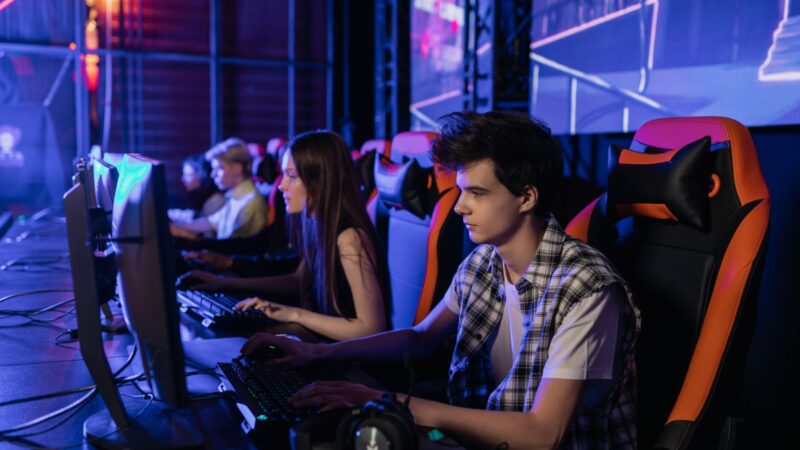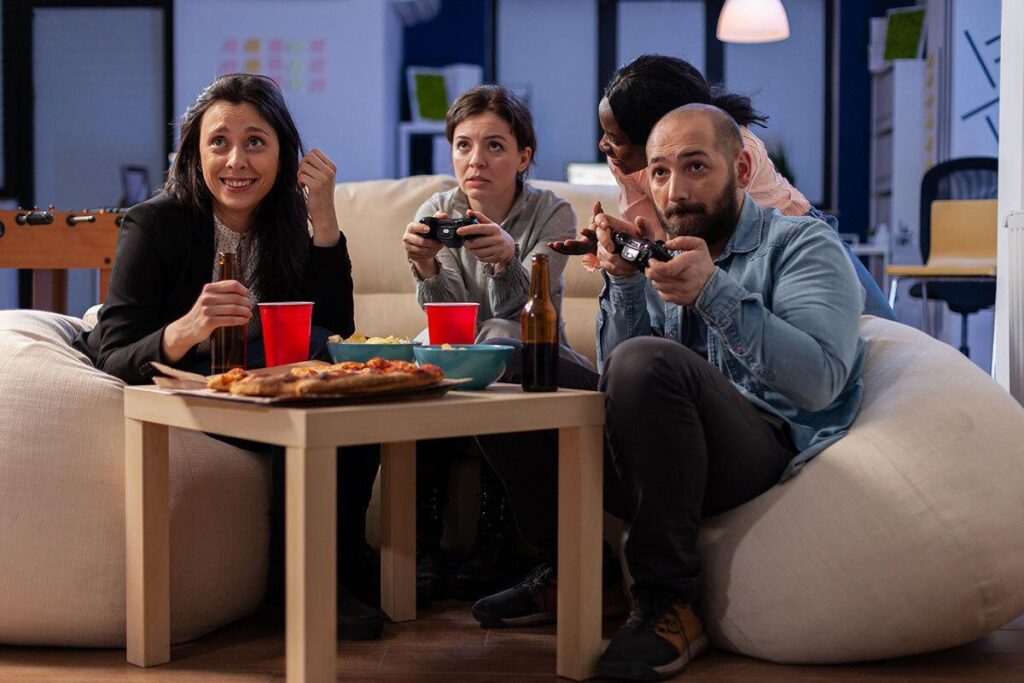
Video games are no longer just about sitting alone in a dark room, staring at a screen, and trying to beat a high score. Over the last five years, gaming has transformed into a massive digital playground where connecting with other people is the main event.
Recall how you interacted with your games in 2021. Perhaps you would switch on your headsets to connect with your buddies while playing, but the general feel remained competitive. In contrast, consider today’s scenario where the line that existed between social networking sites and gaming platforms is gone. People play games not necessarily for gaming anymore, but simply to socialize, listen to virtual music, exchange items, and form social communities.
Let’s dive into the six biggest ways social gaming has changed over the last five years and see how these shifts affect how we play today.
1. Games Became the New Virtual Hangout Spots
Five years ago, if you wanted to talk to your friends, you probably opened an app like FaceTime, Zoom, or WhatsApp. Today, millions of people open games like Fortnite or Roblox instead, even if they don’t feel like playing the actual game.
The platforms themselves have become third places that exist virtually, providing a setting apart from the traditional home and workplace where one can meet for social reasons. Within the virtual environment, gamers go to live concerts, watch previews for movies, or simply hang out and talk using customized avatars. It does not matter what kind of game is being played because what matters is the simple joy of sharing a digital space with like-minded people.
2. The Explosive Rise of Casual and Casual-Social Formats
Not everyone wants to invest several hours in learning complicated, difficult-to-master controls and in defeating enemies. The greatest change since 2021 lies in the incredible growth in user-friendly gaming platforms that require no installation and absolutely no prior experience.
A perfect example of this trend is the massive popularity of a free-play social casino platform in the US where people can enjoy classic, Vegas-style games strictly for entertainment and community connection. On gaming sites, such as Jackpota, players receive token credits for free or through bonuses when logging into their account each day, enabling them to play games of chance along with their peers. No monetary cost whatsoever is involved, eliminating the need for tension and concentrating on nothing else but pure entertainment and chatting within dedicated social forums. This accessible format has brought millions of non-traditional gamers into the social loop.
3. Cross-Platform Play Became the Standard
Can you recall the frustration associated with having a PlayStation while your close buddy had an Xbox or even a Nintendo Switch? For many years, console makers refused to merge their online networks into one; therefore, playing together was only possible if you bought the exact same hardware.
Fortunately, over the past five years, this frustrating limitation has almost disappeared. Now, cross-platform play has become a universal practice. Whether you have a powerful computer for games, a cell phone, or a video game console at home, you can play alongside all your buddies from any device.
4. Group Streaming and Shared Screen Experiences
In the past, watching games would simply be a spectator activity through platforms such as Twitch and YouTube. The viewer would take a seat, watch a creator play, and type in the ever-flowing chat section.
This has now become an intensely interactive experience that is intertwined within the process of gaming. With the aid of built-in features of social media applications, such as Discord and TikTok, people tend to stream their screens among small audiences while they play. It is no longer the case where a single person performs in front of thousands; instead, it is a more intimate experience where several people watch each other take turns with their controllers. Viewers can even give assistance by dropping helpful objects or voting on in-game decisions.
5. Advanced AI Friends and Smarter Matchmaking
Finding the right group to play with was quite difficult for many people. Either you had to coordinate your online gaming with friends who would otherwise be doing something else offline, or join lobbies filled with toxic strangers who would spoil the fun.
The solution to this problem came in the form of enhanced matchmaking algorithms that use artificial intelligence technology to not only ensure you are matched with similar players but also ensure you get a team with the right behavioral patterns that will not mess up your gaming experience. Additionally, this has been followed by the development of artificial intelligence teammates who can act as real human friends in case your actual friends are not around.
6. The Boom of the Cozy Gaming Community
Five years ago, the loudest voices in the online gaming world were often centered around high-stakes, hyper-competitive shooter games. While those are still popular, there has been a massive cultural shift toward cooperative, relaxed, and cozy games.
Games such as Animal Crossing, Stardew Valley, and Palia have shown that many gamers would rather build their own gardens, decorate homes, and gather resources than fight others. This trend has led to some extremely friendly and caring online communities. Instead of yelling at fellow gamers during a heated game, players now fill up their gaming time with trading virtual items, going to their friends’ customized worlds, and assisting one another in completing relaxing quests. It has made social gaming a source of genuine relaxation and stress relief.
The Final Score
The practice of social gaming has evolved significantly in the past five years and has become a major part of how we build and sustain our friendships and meet other individuals, as well as ways for us to relax and de-stress after a long day.
It has been made possible through the breaking of barriers among different consoles, offering casual games that take away all the pressures associated with hardcore games, and offering us venues where we can simply sit back and chat. With advancing technology through 2026 and even further, there will be more immersive, easily accessible, and more human gaming experiences for us.