Crash games began in crypto casinos built around speed and clear results. In them, players saw each moment play out instantly, from the first move to the payout that followed. On Crypto Friendly Casino Sites, that pace turned into a characteristic of its own, where fairness and direct control kept every round tense. The same design could work inside a PC game, imagined as a short arcade mode driven by timing, focus, and quick reaction.
How the Crash Round Plays Out
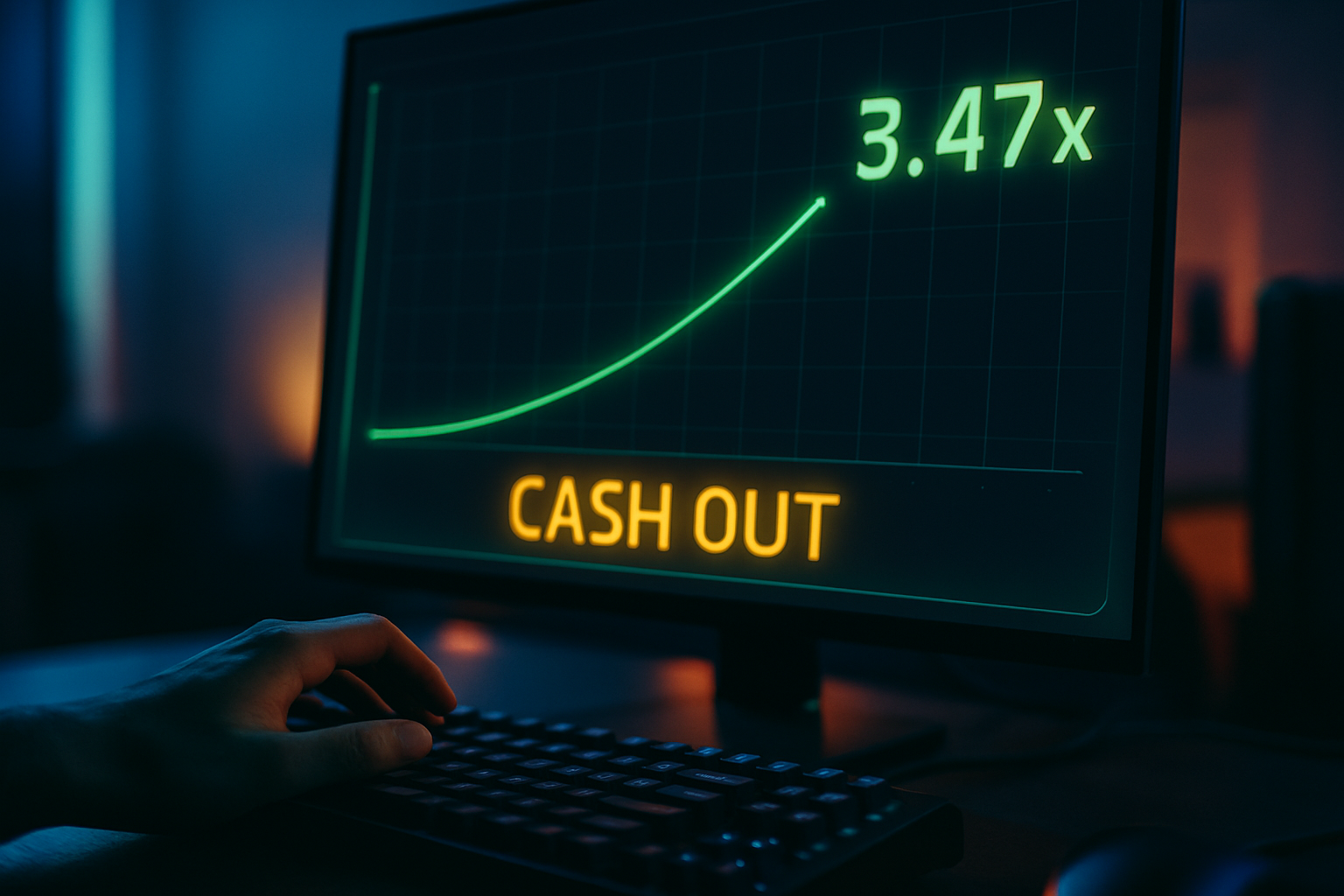
A crash round works because it condenses everything about decision-making into a few charged seconds. The multiplier climbs higher with each moment, and the player decides when to collect before the inevitable collapse. That single loop turns hesitation into risk and timing into skill. It may look mechanical at first glance, yet its tension feels familiar to anyone who has ever retried a time trial or pushed one wave too far in a survival map.
This kind of play fits PC gaming because it strips away delay and focuses on control. There are no menus to hide behind, no systems to calculate in the background, only the immediate choice between restraint and overreach. The player reads the climb, senses the turn, and acts before the screen resets. That clarity links it to arcade challenges that reward precision rather than endurance, setting the stage for how probability and motivation can expand this idea without losing its speed or fairness.
Probability as a Design Tool
A mechanic like this needs uncertainty that makes sense, not chaos that ruins trust. What makes crash mechanics more than a guessing game is how they use probability to keep players alert. The science of surprise explains that probability defines almost every action in games, from whether an attack lands to what kind of loot appears, and that unpredictability forces adaptation. Even a missed ninety percent hit, as shown in XCOM, keeps tension alive because players must adjust after every outcome.
Designers can tune that same idea for a crash mode. Short rounds feel fair when the odds are clear and the outcome teaches something for the next attempt.
- Builds uncertainty that invites risk assessment
- Keeps short rounds unpredictable yet fair
- Gives clear feedback loops that players can study and improve on
Once that foundation is stable, the mode gains replay value without extra content. The unpredictability becomes measurable rather than vague, which preserves trust while still asking for brave decisions.
Why Random Rewards Work: When Uncertainty Becomes Motivation
Players return to short modes when each outcome changes how the next run feels. At the same time, motivation in crash-style play depends on how rewards appear and change. A 2021 study on random rewards in video games shows that when each result feels slightly different but still fair, players stay motivated to keep playing. It also found that small differences in result create focus and emotion, which is the same effect that keeps a crash round exciting.
The study’s point about fair unpredictability connects directly to the crash loop. This works because each increase in the multiplier becomes a decision point where players judge risk in real time instead of waiting for random luck. The mind stays alert when the next choice could be right in the next second or one second after that, and that short burst of uncertainty keeps every run tense but still fair.
As players keep testing their limits, the arrangement slowly becomes clearer. Each attempt teaches a better read of the climb, and the next cash out feels earned through judgment and not guesswork. This is how crash play turns repetition into mastery, because it gives the player a reason to think, adapt, and improve with every run.
Lessons from Monetization Models
When a game rewards skill, the next challenge is deciding how that reward fits within its economy. This is important because once money becomes part of the design, there is a risk that rewards begin serving profit instead of the player’s progress. A crash-style mode can avoid that trap by keeping its fairness consistent across every run. The monetization of video games shows that systems such as microtransactions and battle passes often raise revenue but rarely make players happier, as they tie progress to payment instead of performance. For this reason, any new mechanic must keep its skill-based identity separate from financial reward so the outcome always reflects timing, not spending.
Bringing Crash Logic to Game Worlds
Once fairness and skill stay protected inside a game’s economy, the next question is how this mechanic can serve the play itself. The goal is not to copy casino tension but to apply the same quick judgment to familiar systems that already rely on timing and control. When used this way, the crash loop can expand the depth of different genres instead of replacing their core design.
In a racing title, it could appear as a risk run where the player pushes speed for higher time bonuses until engines strain and control fades. A survival game could use it for resource gathering, where staying longer in a zone multiplies rewards but raises exposure to danger. In an action shooter, the same logic can guide a charge system that increases weapon power the longer it builds, with failure wiping progress if released too late. Even strategy games can adapt it through supply routes, where each extended checkpoint raises both profit and threat.
These examples show that the crash mechanic has room to evolve beyond its origin. It gives developers a way to test nerve, precision, and foresight through short events that match the logic of each genre. When placed carefully, it adds energy to a game world without altering its balance, a brief contest of timing that feels like it belongs exactly where it appears.
What Crash Logic Teaches About Control
Crash mechanics prove that a short burst of tension can teach more than a long campaign. When the outcome depends on reading a pattern, not buying an edge, the player learns through instinct and observation. This is where the idea finds its strength, not in the wager, but in the moment of decision that defines every good game. It shows that risk, when framed by fairness, can turn from a gamble into a skill, and from a casino reflex into pure play.