If you’re looking to upgrade your home office setup or need assistance in setting up a workspace for the first time, you’ve come to the right place. Besides the best technology, there are tips from experienced home office workers. And you can also use these gadgets to play at https://www.betamo.com/en-CA.
Everything related to workshops, home, and garden is tested here. The author is an enthusiastic DIY enthusiast and outdoor fan with years of experience as a test editor and author in the Do-it-yourself field.
Those who think that fast internet and a large desk are enough to work professionally from home will be disabused after a few days. A small laptop screen can quickly become cluttered. It’s only a matter of time until back or wrist pain sets in after a long day, or construction noise disrupts a video meeting without a headset. This is when the home office desperately needs an upgrade.
The Perfectly Equipped Home Office
In addition to the right hardware, such as a notebook/PC, monitor, headset, and docking station, fundamental aspects like good lighting and desk orientation also play an important role. After all, you want to make working as comfortable as possible. That’s why we’ve compiled a few gadgets and tips from the editorial team, in addition to the optimal equipment, to liven up monotonous workdays a little.
With this checklist, you’ll get a brief overview of the essential technology and basic equipment for a workplace in your own home:
– Desk of adequate size, at least 120 x 60 cm, ideally height-adjustable
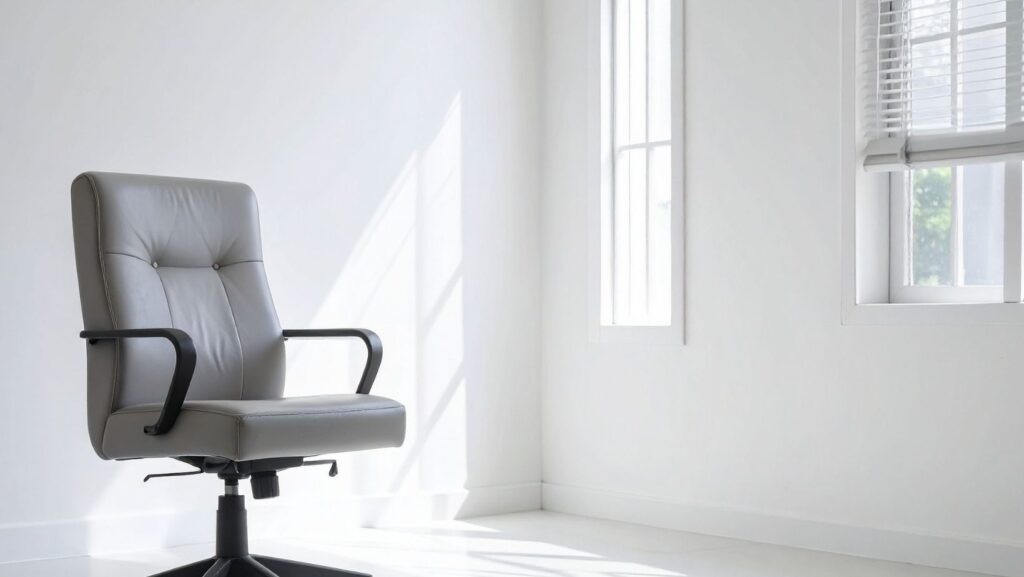
– Ergonomic and comfortable office chair
– Powerful laptop or PC
– Large monitor (at least 21 inches) or a second screen
– Ergonomic input devices: mouse and keyboard
– Desk lighting
– Headset and webcam
– Printer, possibly with scanner
– Storage options and organizers
– Good internet connection
Notebook and PC
A laptop is the best choice for a home office if you prefer to work flexibly. It allows you to switch work positions, quickly move to a quieter room amidst noise, or even work outdoors when the weather is nice. Additionally, laptops are the most space-saving work devices for a home office. Anyone who often works on the go, like in trains or cafés, appreciates the flexibility of a laptop. With webcams, speakers, and various ports, laptops already come with the essential basic equipment for a home office.
However, if you sit at a laptop frequently and for long periods, you should consider connecting an additional monitor as well as ergonomic mouse and keyboard. In this case, a laptop stand can also be beneficial: it elevates the screen, and the keyboard can be stored under the stand after work, freeing up space on the desk.
Is It Worth Choosing a Bulky Desktop PC?
Definitely, because for tasks requiring a lot of computing power, they are the better choice. Whether you want to spend 250 euros or 2,500 euros, you can get more power and storage space with a desktop PC than with a laptop for the same price. This can be a crucial decision factor for those who often multitask or work with resource-intensive programs, like video editing.
Desktop PCs generally offer a better price-performance ratio compared to laptops. They also usually provide more connection options for monitors and other peripherals, without the need for adapters. Furthermore, individual components can be much more easily replaced than in laptops, making the PC a more durable and sustainable solution.
Mini PCs are interesting for home office workers who are looking for a compact computer that can fully replace a desktop model for everyday tasks. They require very little space on the desk and are usually no larger than a stack of CD cases. Their computing power is comparable to that of common laptops, while still retaining the advantage of interchangeable individual parts.
Keyboard and Mouse
When working with a desktop PC, a keyboard is indispensable. But even for laptops, it’s advisable to have an additional keyboard. This makes typing significantly more ergonomic, especially since you can choose the distance of the keyboard from the screen yourself. A flat model with a wrist support is the most gentle on wrists and fingers. A keyboard also provides keys that are often missing on compact laptops—for example, a number pad. Keyboards can be connected directly or via a USB hub to a notebook, of course, they can also be wireless with small Bluetooth adapters.
When it comes to the **mouse**, it depends on personal preference and habits, as there are an incredible number of variants: wired and wireless, vertically oriented, for right or left-handed users, and with various clicking mechanisms.