Imagine two scenarios. In the first, you log into a sweepstakes gaming platform and find a notification: five dollars have been added to your account balance. You nod, appreciate the gesture, and perhaps mentally calculate that this covers a fraction of your next play session. It is a transaction. It is math.
Now, imagine the second scenario. You log in and a bright, animated wheel appears. You have been gifted twenty free spins on a new, Egyptian-themed slot game. There is no guaranteed value attached to them. They could be worth fifty cents; they could be worth fifty dollars. You click “Claim,” and immediately, your heart rate elevates slightly. You aren’t just receiving money; you are receiving an event.
Rationally, the five dollars is the superior reward. It is liquid, certain, and flexible. You know exactly what you have. Yet, for the vast majority of players, the free spins generate a significantly more potent emotional response. They trigger excitement, engagement, and a specific type of joy that raw cash rarely replicates.
This phenomenon isn’t accidental, nor is it a sign of poor mathematical skills on the part of the player. This complex interplay of psychology, neuroscience, and behavioral economics aligns closely with modern business strategy insights where long-term user engagement and sustainable value creation are central priorities.
To understand why we prefer the spin to the dollar, we have to look past the screen and into the wiring of the human mind.
The psychology of potential over certainty
At the heart of the preference for free spins is the difference between “utilitarian” and “hedonic” value. Cash is utilitarian. It is practical. When we see a cash bonus, our brains often engage in “mental accounting,” a concept introduced by economist Richard Thaler. We subconsciously file that money into responsible categories—bills, savings, or the cost of the next game. It feels like a refund or a discount.
Free spins, however, are purely hedonic. They belong to the realm of entertainment and pleasure. Because they cannot be used to pay a light bill or buy groceries directly, they are mentally uncoupled from responsibility. This creates a “guilt-free” zone for the player. The emotional burden of spending is removed, leaving only the upside of the potential win.
Furthermore, cash represents a known quantity, while free spins represent potential. The human brain is fascinated by the unknown. A fixed five-dollar reward has a definitive ceiling. A set of free spins acts as a lottery ticket; the ceiling is defined only by the game’s maximum payout. It is the “what if” factor that drives the emotional engagement. The player isn’t playing for the value of the spin itself (which might be ten cents); they are playing for the fantasy of what that spin could unlock.
Neuroscience: Dopamine and the anticipation of reward
To understand the grip of the free spin, we must look at the neurochemistry of the brain, specifically the role of dopamine. It is a common misconception that dopamine is the “pleasure chemical” released when we win. In reality, dopamine is the neurotransmitter of desire and anticipation.
Research by neuroscientist Robert Sapolsky who is a professor of biology and neurology at Stanford University has shown that dopamine levels spike not when a reward is received, but when a signal implies that a reward might be coming. In the context of sweepstakes games, the “signal” is the start of the free spin cycle.
The power of uncertainty
When a reward is guaranteed (like a cash deposit), the dopamine response is relatively flat. The brain knows what to expect. However, when the reward is uncertain—as it is with a free spin—dopamine production goes into overdrive. This is known as a “variable ratio reinforcement schedule,” a concept pioneered by B.F. Skinner.
Because the outcome of a spin is unpredictable, the brain remains in a state of high alert and high engagement. The spinning reels represent the gap between expectation and result. In that gap, dopamine floods the striatum (the brain’s reward center), creating a sensation of thrill that a static cash balance simply cannot provoke.
The near-miss effect
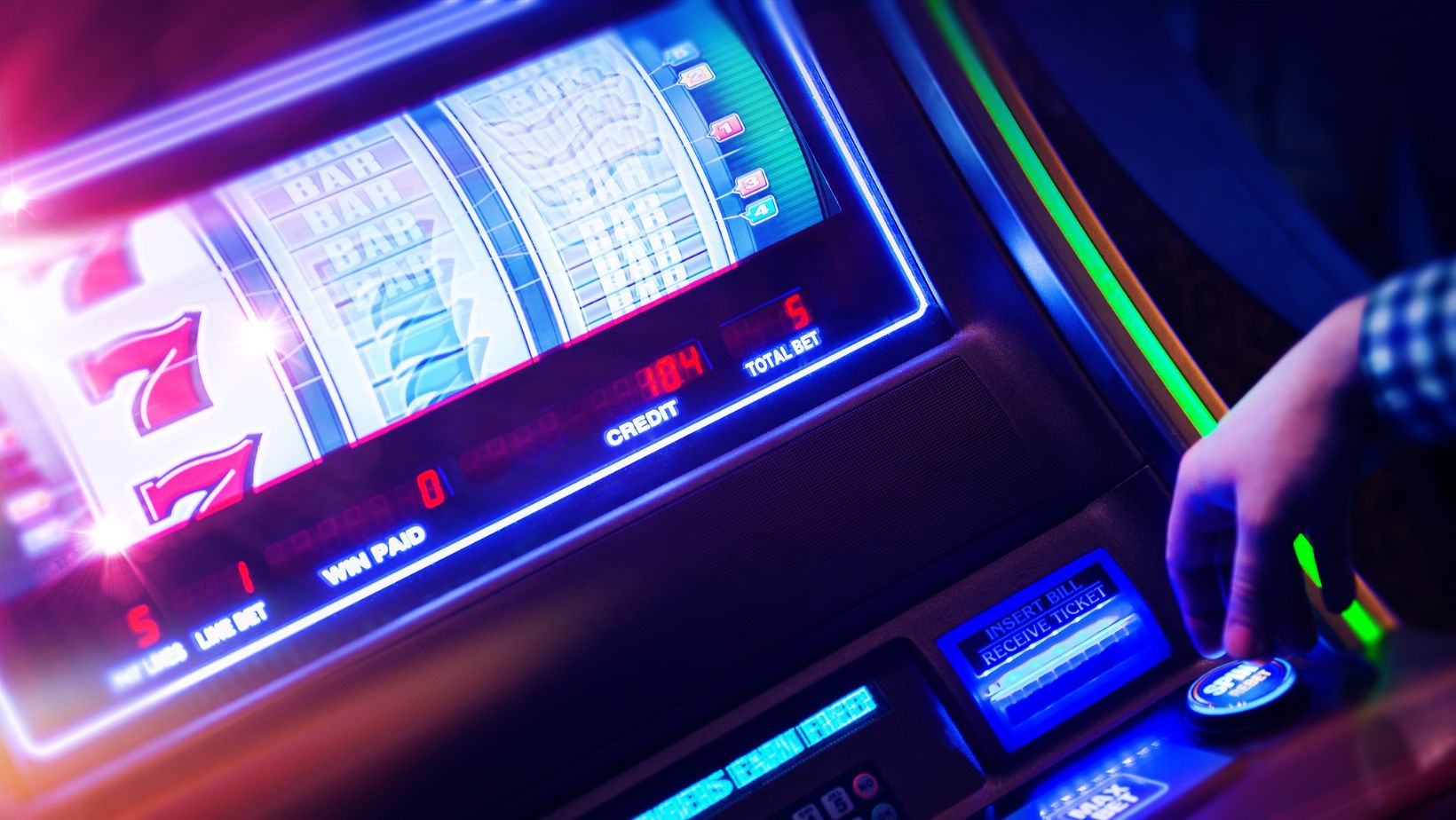
Free spins also capitalize on the “near-miss” effect. This occurs when the reels stop just short of a jackpot—two sevens line up, and the third lands just off-screen. To the logical mind, this is a loss. To the neurological mind, this registers almost identically to a win. The brain interprets a near-miss as a signal that success is imminent and that skill is improving (even in a game of pure chance).
When playing through a batch of free spins, the rapidity of the play increases the frequency of these near-miss events. Since the player isn’t paying for these spins, the frustration of the loss is minimized, but the excitement of the near-miss remains. This creates a loop of positive reinforcement that keeps the player emotionally tethered to the experience.
The perception of risk and the endowment effect
Another psychological lever at play is the perception of risk. Humans are generally risk-averse; according to Prospect Theory, developed by Daniel Kahneman and Amos Tversky, the pain of losing is psychologically about twice as powerful as the pleasure of gaining.
When betting with cash (even bonus cash), the player is acutely aware of the balance decreasing. Every spin that doesn’t result in a win feels like a small loss, triggering a subtle pain response. Free spins bypass this mechanism entirely. Because the “cost” of the spin is zero, the loss aversion center of the brain stays quiet. The experience is framed entirely as a potential gain.
This leads to bolder behavior. Players using free spins are often watching the game with a level of optimism that vanishes when they switch to their own funds. They are essentially playing with “house money,” which encourages a more relaxed, exploratory, and emotionally positive mindset.
Ownership and the Endowment Effect
Once a player is awarded free spins, the “Endowment Effect” kicks in. This psychological bias suggests that people ascribe more value to things merely because they own them. Once those 20 spins are in the player’s account, they feel like a personal possession that must be protected and utilized.
If a casino offered to buy back those free spins for their mathematical average value, many players would refuse. The emotional ownership of the potential big win is worth more to them than the cold, hard stats of the likely win.
A look at Big Shot Games
Big Shot Games provides a clear example of how these mechanics are implemented in a modern sweepstakes environment to maximize player engagement without relying solely on monetary value. On this platform, free spins are often integrated into the gameplay loop as a rhythmic pacing tool rather than just a transactional bonus. The visual design during these sequences usually shifts—lighting may darken or become more dynamic, and the audio tempo often accelerates. This creates a distinct “mode” of play that separates the free spin experience from the standard base game. By isolating these spins as a special event, the platform ensures that the player focuses entirely on the screen, heightening the sensory input. The lack of friction—players don’t need to adjust bet sizes or make decisions during these rounds—allows for a streamlined experience where the only focus is the anticipation of the result.
Expert insight on player preferences
The industry has taken note of this shift in player preference. It is no longer enough to simply offer a functional game; the method of delivery matters. Analysts have found that retention rates often correlate higher with experiential rewards than with flat balance adjustments. According to reviews of Oddsseeker, players consistently rate platforms with frequent, interactive bonus mechanics higher than those with static rewards, suggesting that the “fun factor” of the free spin is a critical metric for user satisfaction. This aligns with the broader understanding that engagement is driven by the journey of the game, not just the destination of the payout.
The cultural shift in gaming rewards
The preference for free spins over cash also mirrors a larger shift in gaming culture. We live in the era of the “loot box” and the “unboxing video.” Modern gaming—from mobile RPGs to battle royales—has conditioned players to value the reveal.
Opening a chest in a video game to find a rare item is exhilarating. Finding a pile of gold coins is useful, but boring. Sweepstakes games are part of this ecosystem. The free spin is the sweepstakes equivalent of the loot box. It is a mystery wrapped in a digital package.
This cultural conditioning means that younger demographics, who have grown up with gamified reward systems in everything from coffee apps to fitness trackers, are natively tuned to respond to the mechanic of the spin. They are seeking a dopamine hit, an experience, and a story. “I won fifty bucks” is a statement of fact. “I had a free spin and hit the bonus round which multiplied ten times” is a story. Humans are storytelling creatures, and free spins provide the narrative arc that cash lacks.
Conclusion
The superiority of the free spin over the cash bonus is a victory of emotion over logic. It demonstrates that we are not calculators; we are dreamers. A cash bonus satisfies our wallet, but a free spin satisfies our curiosity.
By leveraging the neuroscience of anticipation, bypassing our innate fear of loss, and tapping into our desire for narrative and excitement, free spins create a unique emotional resonance. They transform a passive transaction into an active event. As the gaming landscape continues to evolve, understanding this psychological underpinning is crucial. It reminds us that in the world of play, the value of a reward is measured not just in currency, but in the heartbeat of the moment before the reels stop.